Easter Activity Book for Kids: Creative KDP Ideas
Creating an Easter activity book for kids for KDP is one of those publishing projects that can feel both straightforward and deceptively layered. On the surface, it looks like a simple collection of puzzles and coloring pages. But when you start planning one, you quickly realise there is real room for thoughtful design, original thinking, and genuine usefulness. Whether you are a seasoned KDP creator or just starting to explore printable and publishable activity books, Easter offers a rich theme that resonates with families, educators, and caregivers. The trick is to move beyond generic bunnies and eggs and build something that feels fresh, organised, and genuinely engaging for the children who will use it.
What Makes an Easter Activity Book for Kids Work on KDP
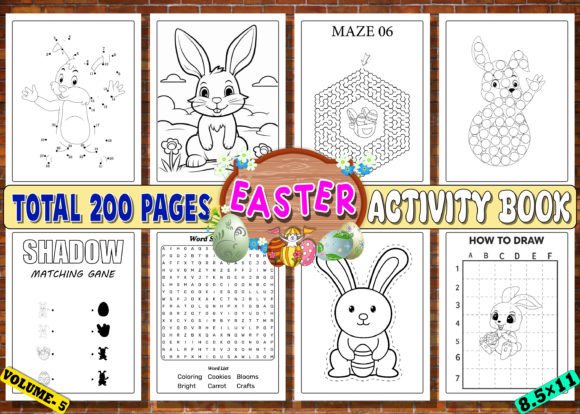
An Easter activity book for kids typically includes colouring pages, mazes, word searches, dot-to-dot puzzles, spot-the-difference challenges, and simple games. But the most successful ones share a few common traits. They are age-appropriate, visually consistent, and logically structured. They also offer enough variety to hold a child's attention for more than a few minutes. For KDP publishers, this means thinking about layout, page count, and how the activities flow from one to the next. A book that feels rushed or disjointed will not perform well, no matter how cute the cover art is.
What makes this category interesting is that it sits at the intersection of creativity and practicality. You are not just designing activities—you are designing an experience. A child might receive this book in an Easter basket, use it at a family gathering, or take it on a car trip during spring break. Each context places different demands on the content. A book meant for quiet home use can include more detailed colouring pages. One intended for travel might benefit from shorter, quicker activities that don't require a flat surface or adult supervision.
Creative Possibilities Beyond the Obvious
Most Easter activity books lean heavily on rabbits, eggs, and pastel colours. These are fine starting points, but they can also become predictable. The creators who stand out are the ones who introduce subtle twists. For example, you could design a series of puzzles that teach simple vocabulary about spring and Easter traditions. Or create mazes that tell a mini story—help the bunny find the basket, lead the chick back to the nest. These small narrative touches turn a puzzle into something more memorable.
Another approach is to vary the activity types in unexpected ways. Instead of just colouring pages, include step-by-step drawing prompts where kids learn to draw an Easter bunny or a decorated egg. Add simple cut-and-paste activities that require scissors and glue, or include a page where kids can design their own Easter egg pattern. These interactive elements raise the perceived value of the book and give parents or teachers more reasons to choose it over a simpler alternative.
You can also experiment with format. A standard 8.5 x 11 inch book is common, but a smaller 6 x 9 inch format can feel more portable and less intimidating for younger children. Some creators produce both versions to appeal to different buyers. Similarly, you might offer a black-and-white interior for cost-effective printing or a full-colour interior for a premium product. Each decision affects the book's positioning and price point.
How Different Creators Can Adapt the Same Idea
The beauty of an Easter activity book for kids is that it can be adapted for many audiences. A homeschooling parent might use it as a supplement for early learning. A preschool teacher could print individual pages for classroom centres. A children's librarian might recommend it for holiday programming. Each of these users has different needs, and a well-designed book can serve all of them if you plan carefully.
For KDP publishers targeting parents, emphasise ease of use. Include clear instructions on each page, avoid overly complex layouts, and make sure the activities are self-explanatory. Parents are often looking for screen-free entertainment that doesn't require them to explain every step. If your book can be handed to a child and used without constant guidance, that is a strong selling point.
For educators, focus on skill-building. Label activities by the skill they develop—fine motor skills, letter recognition, logical thinking, or hand-eye coordination. Teachers appreciate content that aligns with developmental goals. You might also include a table of contents that groups activities by difficulty level, making it easy for a teacher to find the right page for each child.
For bloggers and content creators, an Easter activity book can be repurposed into print-at-home PDFs or digital downloads. You can offer a free sampler to build an email list, then sell the full book on KDP. This hybrid approach lets you test which activities resonate most before committing to a print run.
Practical Guidance for Keeping Your Book Clear and Organised
A common mistake with activity books is trying to pack too much onto one page. Young children need space to colour, draw, and write. Cramped layouts frustrate them and lead to messy results. Give each activity room to breathe. Use large print for instructions and simple fonts that are easy to read. Avoid decorative fonts for the main text—they might look pretty but can be hard to decode for early readers.
Consistency matters more than you might think. If you use a dotted line for cut-out activities, use the same style throughout the book. If you include a border on colouring pages, keep the border style consistent. Small details like these make the book feel professional and intentional. They also signal to buyers that you care about the user experience.
Think about the sequence of activities. Start with simpler tasks like colouring or matching, then introduce more complex puzzles like word searches or mazes. This gradual increase in difficulty helps children build confidence. End the book with a creative open-ended activity, such as "Design Your Own Easter Card" or "Write a Short Easter Story." This gives the book a satisfying finish rather than just trailing off.
If you include an answer key for puzzles, place it at the very end of the book. Some parents prefer to tear out the answer key to prevent cheating, so consider printing it on a separate page that can be easily removed. This small practical detail shows that you understand how the book will actually be used.
Staying Original Without Reinventing the Wheel
There is a fine line between following a proven format and copying what everyone else is doing. Your Easter activity book for kids does not need to invent a new genre, but it should have a clear voice or angle. Maybe your book focuses on Easter traditions around the world. Maybe it uses animal characters that reappear across multiple activities. Maybe it is designed specifically for left-handed children. Any unique angle can help your book stand out in a crowded KDP category.
Originality can also come from your illustration style. If you draw your own artwork, lean into your visual strengths. If you use licensed or purchased assets, take the time to combine them in a way that feels cohesive. Avoid mixing too many different art styles in one book—it confuses the visual tone and makes the book look like a collection of random pages rather than a unified product.
Another way to stay original is to include activities that go beyond paper. For example, you could add a page that encourages kids to go outside and find natural items like flowers or leaves to decorate a drawing. Or include a simple recipe for Easter-themed snacks that a child can help prepare. These cross-platform elements turn a book into a springboard for real-world experiences, which parents love.
Practical Recommendations for Your KDP Project
If you are planning your own Easter activity book for kids, start by defining your target age range clearly. Ages 3–5, 5–7, and 7–9 all require different types of activities and different levels of text. Do not try to cover too wide an age range in one book—it will end up too simple for older kids and too complex for younger ones. Instead, consider creating a series of books for different age groups.
Decide on your page count early. A standard KDP activity book ranges from 60 to 100 pages. Aim for a page count that allows you to offer variety without padding. If you have 70 pages of solid activities, that is better than 100 pages where half feel like filler. Quality over quantity always wins in this market.
Test your activities on actual children before publishing. Hand a few pages to a friend's child or volunteer at a local preschool. Watch how they interact with the puzzles. Do they understand the instructions? Do they stay engaged? Do they finish quickly or get frustrated? This feedback is invaluable and will save you from publishing something that looks good on screen but falls flat in real life.
Finally, pay attention to your book description on Amazon. Highlight the variety of activities, the age range, and any unique features. Use bullet points for readability. Include a sample image of one or two interior pages. Buyers want to see what they are getting before they click purchase. A clear, honest description builds trust and reduces returns.
Building a Sustainable Approach to KDP Activity Books
An Easter activity book for kids can be more than a single product—it can be the start of a seasonal series. Once you have a template and a workflow that works, you can adapt it for other holidays and themes. Halloween, Christmas, Valentine's Day, and back-to-school all offer similar opportunities. Over time, you build a catalogue that generates passive income year after year, with each new release cross-promoting the others.
The key is to treat each book as a craft project in its own right. Rushed work shows. Thoughtful work sells. Whether you are a designer, a teacher, a parent, or an entrepreneur, the Easter activity book category rewards creators who care about the small things. The right page layout, the right activity mix, the right balance of fun and learning—these details add up to a product that feels complete. And when a parent opens that book on Easter morning and sees their child happily engaged, you have delivered exactly what you promised.