How a Dated Monthly Planner Can Transform Your Organization
If you’ve ever stared at a blank calendar and felt more overwhelmed than inspired, you’re not alone. The difference between a tool that actually helps you get things done and one that collects dust often comes down to structure. That’s exactly where a dated monthly planner earns its keep. Unlike undated layouts that require you to fill in dates manually—which can feel like homework every month—a dated monthly planner arrives pre-labeled with the days, weeks, and months of the year. It removes friction from planning and lets you focus on what matters: the actual tasks, events, and goals.
I’ve used both styles extensively, and the dated version consistently wins for anyone juggling multiple roles. Whether you’re a freelancer managing client deadlines, a parent coordinating school drop-offs, or a marketer mapping quarterly campaigns, a dated monthly planner offers a reliable backbone for your schedule. No guesswork, no extra setup.
What Makes a Dated Monthly Planner Distinct?
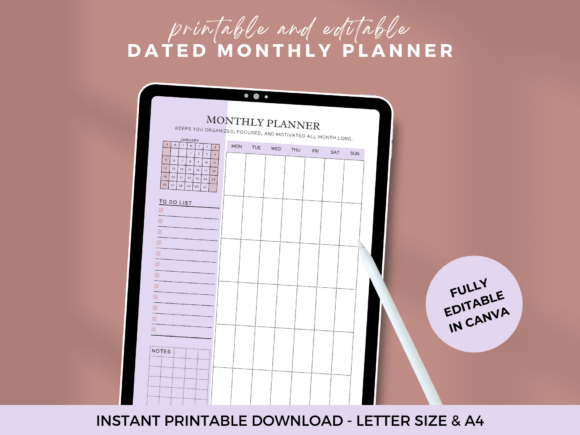
A dated monthly planner is exactly what it sounds like: a planner where each page corresponds to a specific month, with all dates preprinted for that month. The level of detail varies—some include weekly spreads alongside the monthly view, while others stick to a pure monthly grid with space for notes. The core advantage is that you never have to write down “January 1” or “March 15”; those are already there.
Key characteristics include:
- Preprinted dates: Every day, week, and month is laid out for the full calendar year (or a custom period).
- Monthly spreads: A two-page (or single-page) overview that shows the entire month at a glance.
- Consistent format: The same layout repeats across all months, making it easy to scan and plan ahead.
- Additional sections: Many dated monthly planners also include yearly overviews, goal pages, notes sections, and sometimes even stickers or markers.
What sets this apart from a weekly or daily planner is the macro-level view. Monthly planners excel at helping you see the big picture—upcoming deadlines, recurring events, and long-term progress. They’re less about micromanaging hourly tasks and more about orchestrating your month with intention.
For Professionals and Entrepreneurs
In a corporate environment, the dated monthly planner shines when used for project timelines, client meetings, and quarterly reviews. I’ve seen teams adopt a shared monthly planner on a whiteboard, but a personal dated version gives you ownership. For example, a marketing manager might block out content launch dates, campaign debriefs, and budget reviews on the monthly spread. Because the dates are fixed, you can pencil in recurring tasks like “monthly report due” and never miss them.
Entrepreneurs benefit from using the planner to map sales cycles, product development phases, or networking events. One client of mine uses her dated monthly planner to track inbound leads, follow-up calls, and invoicing schedules. She says the preprinted dates save her about 30 minutes each month compared to her old undated system—time that adds up fast.
For Creatives and Freelancers
Creatives often resist rigid structure, but a dated monthly planner can actually free up mental space. Instead of constantly checking what day it is or recreating the calendar, you can focus on your craft. Illustrators, for instance, use monthly spreads to plan exhibition submissions, commission deadlines, and personal project milestones. Bloggers and content creators schedule editorial calendars, social media promotions, and affiliate partnership windows directly on the dated grid.
I recommend using a dual-pen system: one color for appointments and deadlines, another for creative goals. For example, a freelance writer might mark client deliverables in blue and personal writing sprints in green. The dated planner then becomes both a calendar and a motivational tracker.
For Educators and Students
Teachers, professors, and students rely on semester schedules that change each year. A dated monthly planner helps map out assignment due dates, exam periods, and school holidays. An educator might use it to plan lesson units across the term, while a graduate student coordinates thesis milestones with conference deadlines. Because the dates are fixed, you can quickly see if two critical deadlines overlap and adjust in advance.
For Digital and Commercial Use
Surprisingly, dated monthly planners aren’t limited to paper. Many digital tools like Notion, Trello, and Google Calendar offer dated monthly views, but the physical version has a unique advantage: no notifications. For digital detox enthusiasts or those prone to screen fatigue, a paper dated monthly planner provides a tactile, distraction-free experience. Small business owners often keep one on their desk to track inventory orders, supplier calls, and financial reconciliations.
I’ve also worked with event planners who use dated monthly planners as a master calendar. They list venue bookings, client meetings, and vendor confirmations across the month. The visual layout helps them catch scheduling gaps or double-bookings at a glance.
Usability and Time Savings
The biggest benefit of a dated monthly planner is reduced setup time. With an undated planner, you have to write the dates yourself for each month. That might not sound like much, but over a year, it adds hours—and it’s easy to make mistakes, especially if you start mid-year. Preprinted dates eliminate that friction. You open the planner to the current month and start planning immediately.
This is especially valuable for people who need to plan but don’t have a consistent routine. Commuting professionals, for instance, can quickly jot down appointments during a train ride without having to first date the page. The cognitive load is lower, which means you’re more likely to actually use the planner.
Improved Communication and Collaboration
When you share your planner with a partner, assistant, or project team, having fixed dates prevents confusion. There’s no ambiguity about which day “the 15th” refers to. For remote teams, a digital dated monthly planner synced across devices keeps everyone aligned. I’ve seen marketing agencies use a shared dated planner to coordinate campaign launches and retros, reducing email back-and-forth.
Branding and Aesthetic Value
For those who value appearance, dated monthly planners come in many designs—minimalist, elegant, bold. The consistent layout often looks cleaner than an undated alternative with handwritten dates. Some brands offer matching covers, tabs, and stickers, turning the planner into a personal brand tool. A professional who meets clients might choose a leather-bound dated monthly planner to convey organization and care. The visual coherence reinforces trust.
Engagement and Commitment
Using a dated monthly planner encourages weekly and monthly reviews. Because the dates are fixed, you’re more likely to flip ahead and see what’s coming. This forward-looking habit helps with proactive planning rather than reactive scrambling. Many users report feeling more committed to their goals because the planner itself is a commitment—you’ve invested in a tool that expects you to show up.
Practical Considerations When Choosing a Dated Monthly Planner
Not all dated monthly planners are created equal. Here are some factors to consider before buying or implementing one:
- Start month: Some planners run from January to December; others start in July like an academic calendar. Choose based on your life cycle. Business owners might prefer a fiscal-year planner.
- Layout density: Do you need a full page per month, or a compact two-page spread? If you have many events, look for a spacious grid with lined sections for notes.
- Binding and size: A5 and B6 are popular sizes for portability. Wire binding allows the planner to lay flat, which is helpful when writing on the left page. Spiral-bound planners are easier to fold back.
- Additional features: Some dated planners include goal-setting pages, habit trackers, or note spaces. Others are pure monthly grids. Ask yourself what extra content you’ll actually use versus what’s just clutter.
- Paper quality: If you use fountain pens or highlighters, check the paper weight to avoid bleed-through. Thicker paper also feels more premium.
I recommend buying a dated monthly planner that starts when you’re ready to commit. If it’s already June, a “January start” planner might feel demoralizing. Many brands now offer “anytime start” dated planners or resale options for half-year editions.
How to Implement a Dated Monthly Planner Effectively
Simply owning the planner isn’t enough. To get real value, develop a simple routine:
- Monthly prep: At the beginning of each month, block some quiet time (15–30 minutes) to fill in known events, deadlines, and recurring tasks. Use a pencil for flexibility.
- Weekly check-in: Every Sunday or Monday, review the month ahead. Identify top priorities and transfer action items to a daily task list if needed.
- Use color coding: Assign colors or symbols for different domains (work, personal, health). This makes scanning faster.
- Review monthly: At month’s end, flip back and assess what worked and what didn’t. Adjust next month’s layout if needed.
A dated monthly planner is most effective when you treat it as a living document—not something you fill out once and forget. Keep it visible on your desk or in your bag. Use it as a regular reference point during meetings or planning sessions.
Final Thoughts
The dated monthly planner is a deceptively simple tool with a lot of power. By removing the friction of date entry, it encourages consistent planning and reduces the chance of overlooking important events. Whether you’re a busy professional, a creative freelancer, an educator, or a small business owner, the monthly view helps you see the forest and the trees. Invest in one that matches your workflow, and you might find that the biggest transformation isn’t in your calendar—it’s in your ability to focus on what actually matters.