What Summer Sky Illustration Offers and How It Compares to Other Visual Styles
Summer sky illustration occupies a distinctive place in the world of visual communication. It evokes the warmth, openness, and transient beauty of fair-weather clouds, golden light, and expansive blue horizons. But what exactly defines this style, and how does it hold up against other illustration approaches? Whether you are commissioning artwork for a brand, selecting visuals for editorial content, or exploring personal creative projects, understanding the nuances of summer sky illustration helps you choose the right direction.
Defining Summer Sky Illustration
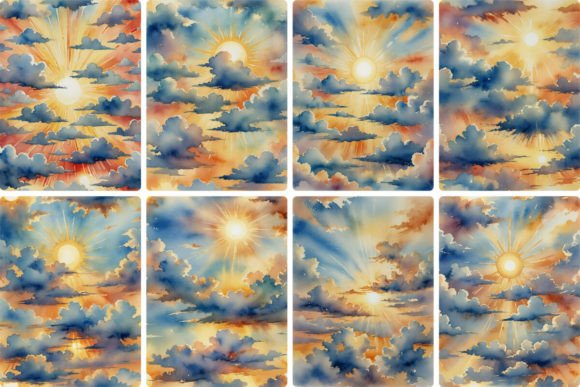
At its core, summer sky illustration refers to artwork that centers on sky imagery associated with the summer season. This includes depictions of clear blue skies, wispy or dramatic cloud formations, sunlit gradients, and often the interplay of light and atmosphere that characterizes long, warm days. The style can range from highly realistic renderings to simplified, impressionistic, or even whimsical interpretations.
What makes summer sky illustration distinct is its emotional anchoring. Unlike generic sky imagery, which might serve a purely descriptive function, summer sky illustrations tend to carry connotations of leisure, nostalgia, optimism, and natural beauty. They are rarely neutral. A summer sky illustration invites the viewer to feel something: the calm of a late afternoon, the anticipation of a perfect beach day, or the quiet wonder of a sunset.
Technically, these illustrations often employ warm color palettes, soft transitions between hues, and careful attention to light sources. Whether created digitally or with traditional media, the emphasis is on capturing the luminous quality of daylight and the airy texture of clouds. The best examples manage to convey both the specificity of a particular moment and the universal appeal of a beautiful sky.
How Summer Sky Illustration Compares with Other Sky and Landscape Styles
When evaluating summer sky illustration, it is useful to consider how it differs from other approaches to sky imagery. Many illustrators and designers work with variations such as dramatic weather illustrations, night sky scenes, or abstract atmospheric pieces. Each has its own strengths and appropriate contexts.
Dramatic weather illustrations focus on storms, lightning, heavy clouds, or turbulent skies. These convey tension, energy, or foreboding. In contrast, summer sky illustration leans toward serenity and openness. If your project needs to evoke calm or positivity, the summer sky approach is likely a better fit. For editorial content about climate change or conflict, a dramatic sky might serve the narrative more effectively.
Night sky illustrations emphasize mystery, depth, and the cosmos. They work well for themes of wonder, science, or introspection. Summer sky illustration, by comparison, is grounded in daylight and visibility. It suits contexts where clarity, warmth, and approachability are priorities. A children's book about exploring nature, for example, would benefit more from a summer sky illustration than a starry night scene.
Abstract atmospheric pieces may prioritize color, texture, or shape over recognizable sky elements. They offer flexibility and can avoid literal associations. Summer sky illustration, while still artistic, usually retains enough recognizable features to read clearly as sky. This makes it more accessible for general audiences but less suited for avant-garde or highly conceptual work.
There are also hybrid approaches that combine elements of summer sky with other styles. An illustration might feature a bright blue sky with subtle storm clouds on the horizon, or a sunset gradient that fades into a night sky. These hybrids can be effective when your message spans multiple moods or timeframes.
Strengths of Summer Sky Illustration
The primary strength of summer sky illustration lies in its emotional resonance. People have strong positive associations with summer skies: vacations, outdoor activities, freedom, and beauty. By tapping into these feelings, a well-executed summer sky illustration can create an immediate connection with viewers.
Another advantage is versatility. Summer sky illustrations work across many media: book covers, website headers, advertising campaigns, packaging, murals, and more. The style can be adapted to suit different brand voices, from playful and whimsical to sophisticated and serene. Because the subject matter is broadly relatable, it rarely feels niche or exclusionary.
From a technical standpoint, summer sky illustration also offers opportunities for visual impact. The contrast between bright blue and white clouds, or the gradient of a sunset, provides natural focal points. Illustrators can play with composition, light, and color to draw the viewer's eye exactly where they want it.
Additionally, summer sky illustration tends to age well. Unlike trend-driven graphic styles that may look dated after a few years, the subject matter is timeless. A well-crafted sky illustration from decades ago can still feel fresh and appealing today, provided the technical quality holds up.
Tradeoffs and Limitations
No style is without its limitations. One tradeoff with summer sky illustration is that it can be perceived as generic if not executed with originality. Because blue skies and clouds are so familiar, the challenge is to bring a fresh perspective or a distinctive artistic voice. Without that, the illustration risks blending into countless other similar images.
Another limitation is that summer sky illustrations may not suit every tone or message. For serious, somber, or critical content, the lightness of a summer sky can feel incongruous. A financial services report on market volatility, for instance, would likely need a more neutral or serious visual approach. The same applies to topics such as illness, loss, or social critique, where a summer sky illustration could seem dismissive or out of touch.
There is also the question of cultural relevance. While blue skies are widely appreciated, not all regions or audiences associate them with summer in the same way. In tropical climates, the summer sky might be synonymous with humidity and storms rather than idyllic calm. Understanding your audience's lived experience helps determine whether summer sky illustration will resonate or fall flat.
Finally, summer sky illustration requires a certain level of skill to execute well. Capturing natural light, cloud forms, and atmospheric depth convincingly is not trivial. A poorly rendered sky can look flat, unnatural, or amateurish. If budget or timeline constraints limit the illustrator's ability to produce high-quality work, the final result may not meet expectations.
When Summer Sky Illustration Is the Right Choice
Summer sky illustration is particularly well-suited to projects that aim to inspire, reassure, or delight. For example:
- Travel and hospitality brands promoting destinations, outdoor experiences, or relaxation.
- Wellness and lifestyle content focused on mindfulness, self-care, or nature connection.
- Children's books or educational materials where warmth and clarity support learning.
- Product packaging for seasonal items, beverages, or outdoor gear.
- Nonprofit campaigns centered on environmental conservation, community, or hope.
In these contexts, a summer sky illustration can reinforce the desired emotional tone and make the content more memorable. It works best when the overall message aligns with the feelings the illustration evokes.
It is also a strong choice when you need a background or atmosphere that supports other elements without competing for attention. A summer sky illustration can provide a visually pleasing yet unobtrusive backdrop for text, product images, or graphic overlays.
When to Consider Other Options
There are situations where summer sky illustration may not be ideal. If your content addresses serious or complex issues, a more grounded or symbolic visual style could be more appropriate. For example, a healthcare campaign about skin cancer prevention might benefit from direct, informative imagery rather than a nostalgic sky scene.
Similarly, if your brand identity is built around minimalism, edginess, or urban energy, a soft sky illustration could feel mismatched. A gritty urban landscape, bold geometric patterns, or stark monochrome photography might better reflect your message.
Budget and time constraints also matter. If you need a large volume of illustrations quickly, a simpler style that relies less on atmospheric detail may be more practical. Summer sky illustration, especially in realistic or semi-realistic form, requires careful rendering that takes time and expertise.
Finally, consider the medium. A summer sky illustration that looks stunning on a large-format print might lose its impact on a small mobile screen or in a heavily compressed digital file. Test the illustration in its actual use context before committing.
Practical Tips for Choosing Summer Sky Illustration
When evaluating whether summer sky illustration fits your project, start by clarifying your goals. What emotion or message do you want the audience to take away? If the answer aligns with warmth, openness, or optimism, the style is worth exploring.
Next, consider the illustrator's portfolio. Look for diversity in sky treatments, not just one signature look. An illustrator who can shift between realism and stylization, or between bright midday and soft twilight, offers more flexibility. Ask about their process for developing color palettes and cloud forms, since these are central to the style's success.
It can also help to gather reference images that capture the specific sky mood you want. A hazy summer morning, a crisp afternoon, or a golden sunset each communicate differently. Providing clear references reduces the risk of misinterpretation.
Finally, test the illustration alongside your other content. Does it compete with text or other visuals? Does it scale well across platforms? Does it evoke the reaction you anticipated? A little user testing or peer review can reveal whether the illustration is working as intended.
Making an Informed Decision
Choosing an illustration style is rarely about finding the single right answer. More often, it is about weighing tradeoffs and matching the visual approach to the project's goals, audience, and context. Summer sky illustration offers a rich set of possibilities, especially when you need to convey warmth, beauty, and positive emotion. Yet it is not a universal solution, and its success depends on thoughtful execution and alignment with your broader message.
By understanding what makes summer sky illustration distinct, how it compares to other styles, and where its strengths and limitations lie, you are better equipped to decide whether it serves your needs. Whether you commission a custom piece or select from existing work, the key is to remain clear about what you want the illustration to accomplish and to choose the approach that best supports that purpose.