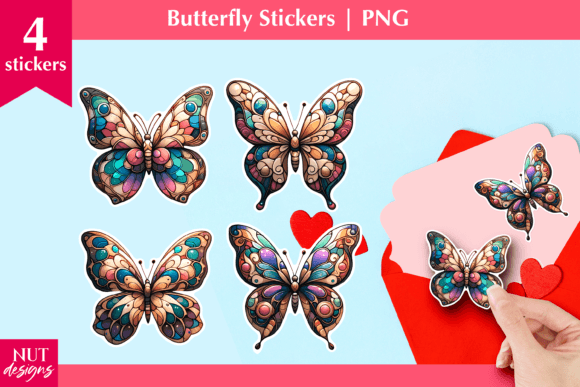
Spring Stickers and Butterfly Stickers
Spring stickers and butterfly stickers have become a go-to choice for seasonal branding, personal journaling, product packaging, and classroom decoration. Their appeal is obvious: they bring lightness, renewal, and a touch of nature to any surface. But beneath that cheerful surface lie several pitfalls that can turn a promising design project into a disappointment. Whether you are a small business owner ordering custom stickers for an Easter promotion or a hobbyist decorating a bullet journal, understanding what can go wrong will save you both time and money.
Many people assume that all spring stickers are essentially the same, just with different images printed on them. That assumption leads to wasted materials, mismatched colors, and stickers that peel off within days. Below are the most common mistakes and misunderstandings, along with practical corrections that will help you get the best results from your spring and butterfly sticker projects.
Choosing the Wrong Material for the Intended Surface
One of the most frequent errors occurs before the design is even finalized: selecting a material that does not match the surface where the sticker will live. Spring stickers and butterfly stickers often end up on water bottles, laptop covers, storefront windows, or outdoor garden pots. Each of these surfaces demands a different adhesive and substrate.
For example, a matte paper sticker with standard permanent adhesive might look lovely on a notebook, but place it on a reusable water bottle and it will bubble and peel after the first wash. Similarly, a glossy vinyl sticker designed for indoor use will fade and curl within weeks if applied to a sun-exposed window.
Better approach: Before ordering, ask yourself exactly where the sticker will be placed. For items that face moisture, heat, or frequent handling, choose weatherproof vinyl with a solvent-based or acrylic adhesive. For indoor flat surfaces like laptops or planners, a matte vinyl or even a high-quality paper sticker can work beautifully and cost less. If you need both outdoor durability and a soft, non-glossy finish, look for matte laminate over vinyl. Taking this single step will eliminate the majority of early sticker failures.
What to check before buying material:
- Whether the adhesive is removable, permanent, or repositionable
- If the vinyl includes UV protection for outdoor use
- Whether the finish (glossy, matte, or translucent) complements the surface color
- If the sticker is dishwasher-safe for drinkware applications
Overlooking Color Matching and Print Dimensionality
Spring stickers and butterfly stickers rely heavily on color to convey mood. Pastel pinks, sky blues, soft yellows, and fresh greens define the season. However, what you see on your screen is rarely what comes off the printer. A butterfly with delicate lavender wings can appear muddy or dull if the printing process uses CMYK conversion without proper calibration, especially on uncoated paper.
Another overlooked detail is the absence of white ink or transparent backing. Many butterfly stickers are designed with intricate wing shapes that look best when only the butterfly itself is printed, not a rectangular white box around it. Without a white underbase, lighter colors printed on clear vinyl may look faint or shift color against dark surfaces.
Better approach: Request a physical proof or a digital mockup on the actual material before approving a full run. If your design uses light, airy colors, ask the printer whether they offer a white underbase for clear vinyl. For die-cut butterfly stickers, confirm that the cut line follows the wing contours closely and that there are no narrow bridges that could tear during weeding or removal. Checking these details early prevents the disappointment of stickers that look washed out or awkwardly shaped.
Ignoring Surface Preparation Before Application
Even the highest-quality spring stickers and butterfly stickers will fail if the surface is not properly prepared. A common scenario: someone sticks a beautiful branch-and-blossom vinyl decal onto a freshly painted wall or a newly polished car bumper, only to find it lifting at the edges within a week. Oils, dust, moisture, and even residual wax can prevent the adhesive from bonding fully.
This mistake is especially common among small business owners who apply brand stickers to product packaging. Cardboard boxes, for instance, have a natural dust layer and variable porosity. If a butterfly sticker is applied directly to untreated cardboard, the adhesive may absorb into the fibers unevenly, leaving a wrinkled appearance or causing the sticker to pop off during shipping.
Better approach: Clean the surface with isopropyl alcohol or a mild degreaser and let it dry completely. For porous materials like cardboard or untreated wood, consider a laminate or coating on the surface first, or choose a sticker material specifically designed for porous substrates. When applying larger spring scene stickers, use a squeegee or a rigid card to press from the center outward, eliminating air bubbles and ensuring full contact. Allow 24 hours for the adhesive to cure before exposing the sticker to water or heavy handling.
Misjudging Scale and Proportion in Design
A beautiful butterfly illustration can lose all its impact if scaled incorrectly. One of the most common complaints among sticker buyers is that the final product arrived much smaller or much larger than expected. This happens because people judge size based on a computer monitor without considering the physical dimensions of the sticker in context.
For example, a 2-inch butterfly sticker might look perfectly proportioned on a screen, but when placed on a standard 16-ounce water bottle, it can appear dwarfed by the curved surface. Conversely, a 5-inch spring meadow scene applied to a planner cover might overwhelm the layout and cover important text or calendar entries.
Better approach: Print a full-size paper template of your sticker at home before ordering. Tape it onto the actual object where the sticker will live. Stand back and evaluate the visual balance. Does the butterfly feel like a subtle accent or does it dominate? Does the spring floral arrangement leave enough breathing room for other elements? Adjust the design file accordingly. This simple test costs nothing and prevents the frustration of an entire batch of stickers that feel off-scale.
Size considerations for common applications:
- Water bottles: 1.5 to 3 inches for accent stickers; 4 to 6 inches for full-wrap decals
- Notebooks and planners: 1 to 2.5 inches for decorative elements; larger for cover art
- Packaging and product labels: Must fit within a designated clear area leaving room for barcodes and text
- Window or glass decals: Larger sizes work well; avoid tiny details that are hard to see from a distance
Neglecting the Role of White Space and Background
Spring stickers and butterfly stickers often rely on airy, open compositions to evoke the season. Yet many designers and buyers try to fill every millimeter of the sticker with content. The result is a cluttered piece that feels heavy rather than fresh. This is especially problematic for butterfly stickers, where the wing pattern itself is the main visual interest. Adding too many extra elements around it reduces the iconic silhouette and makes the sticker read as busy or confusing.
Another overlooked detail is how the background of the sticker interacts with the surface behind it. A sticker with a solid white background placed on a kraft brown envelope can look jarring because the white rectangle stands out harshly against the warm paper tone. A die-cut sticker or one printed on clear material would blend more naturally, allowing the butterfly shape to appear as though it is resting directly on the package.
Better approach: Design with intention. Let the butterfly or floral motif breathe by keeping surrounding elements minimal. If the sticker will be placed on a colored or textured surface, choose a transparent or matching background option. When ordering for a specific use, always test one sample on the actual substrate to see how the background interacts with the surface color. This small check can mean the difference between a sticker that looks like an afterthought and one that looks like it belongs.
Underestimating Setup Costs and Minimum Order Quantities
For entrepreneurs and small business owners, the excitement of creating custom spring stickers and butterfly stickers can lead to ordering too many units too quickly. Many online printers offer attractive per-unit prices but require minimum quantities of 50, 100, or even 500. If you are testing a design for a limited spring promotion, ending up with hundreds of unused stickers ties up cash and storage space.
On the other side of this mistake, some buyers try to save money by ordering from the cheapest printer available, only to receive stickers with off-registration, inconsistent color from sheet to sheet, or adhesive that leaves residue upon removal. The hidden cost of reordering and the lost time far outweigh the initial savings.
Better approach: Start with a small proofing order from a reputable printer that offers low minimums or even one-off samples. Use those samples to test adhesion, color accuracy, and durability on your actual surfaces. Once you are confident in the design and material, scale up the order for your spring campaign. Keep an eye on the per-unit cost, but always weigh it against the quality you need for your specific use case. For short-term promotions, consider digital printing rather than screen printing, as it typically allows smaller runs and faster turnaround.
Forgetting About Storage and Shelf Life
Stickers have a shelf life, and spring stickers and butterfly stickers are no exception. Adhesive performance degrades over time, especially if the stickers are stored in hot, humid, or direct-sunlight conditions. A well-intentioned business owner might order a large batch of butterfly stickers in March for Easter sales, then discover in June that the adhesive has yellowed or lost its tack because the box sat near a south-facing window.
Similarly, hobbyists who buy sticker sheets months in advance may find that the backing paper curls or the adhesive slowly oozes out from under the edges, a phenomenon called adhesive bleed. This is more common with cheaper vinyl materials that lack proper stabilizers.
Better approach: Store stickers flat in a cool, dry, dark place. A drawer, cabinet, or a sealed plastic bin in an air-conditioned room works well. Avoid attics, garages, or damp basements. If you manufacture or sell stickers, include storage instructions on your packaging or website. Rotate your inventory so that older stock gets used first. For stickers you intend to keep for more than six months, invest in higher-grade vinyl and reputable adhesive suppliers. The upfront cost is modest compared to the frustration of opening a pack of ruined stickers when you need them most.
Relying on Generic Designs Without Brand Context
Spring stickers and butterfly stickers are versatile, but they are not automatically appropriate for every business or message. A common misstep is choosing a design that looks pleasant in isolation but clashes with the brand's existing visual identity. A playful cartoon butterfly with thick black outlines might work for a children's product but feel out of place on a minimalist skincare brand's packaging. A soft watercolor blossom that suits a wedding planner might not match the bold typography of a fitness brand's spring campaign.
Better approach: When selecting or commissioning spring and butterfly stickers for a business, consider the overall brand palette, typography, and tone. Does the sticker reinforce the brand story or distract from it? For a cohesive look, choose illustrations that share the same line quality, color saturation, and level of detail as your other materials. If you are buying ready-made stickers from a marketplace, test a few different artists' styles before committing to bulk. The sticker should feel like an extension of your brand, not an unrelated decoration.
Practical Final Checks Before You Order
Before you finalize any purchase of spring stickers or butterfly stickers, run through this short checklist. It captures the most frequently overlooked details and will save you from the most common frustrations.
- Material compatibility: Does the sticker material match the surface, environment, and usage frequency?
- Color and finish: Have you seen a proof on the actual material, and does it include any necessary white ink or underbase?
- Surface preparation: Do you have a clean, dry, compatible surface ready for application?
- Size test: Did you print a paper template and test it in the real location?
- Storage plan: Do you have an appropriate place to store extras until they are used?
- Brand alignment: Does the design feel like it belongs with your other visual materials?
- Order quantity: Are you buying enough to meet your needs without overcommitting to an untested design?
Spring stickers and butterfly stickers can elevate a product, a space, or a personal project when chosen and applied thoughtfully. The difference between a sticker that delights and one that disappoints often comes down to a handful of details that are easy to overlook in the excitement of a new design. By paying attention to material selection, surface preparation, scale, and visual context, you ensure that your stickers bring the fresh, uplifting energy they were meant to deliver.